 How Dassault Systèmes and NVIDIA Are Powering the Future of Industrial AI
Artificial intelligence has officially moved beyond narrow tasks like recommendation engines and chatbots — it’s now transforming how some of the world’s most complex industries design, simulate, and operate products and systems. At the heart of this shift is an ambitious collaboration between Dassault Systèmes and NVIDIA to build an industrial AI platform grounded in science, simulation, and real-world physics.
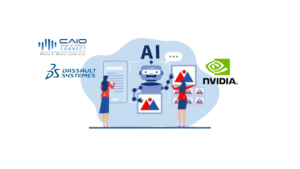
Announced at the 3DEXPERIENCE World event on February 3, 2026, the partnership brings together Dassault Systèmes’ Virtual Twin technologies and NVIDIA’s AI infrastructure and accelerated computing to create a shared architecture for industrial AI at scale. This platform aims to establish Industry World Models — deep, physics-validated representations of products, systems, factories, and even materials — that will serve as mission-critical systems of record across sectors like engineering, manufacturing, biology, and materials science.
AI That Understands the Real World
What makes this initiative stand out is its ambition to bridge the gap between abstract AI models and physical reality. Rather than relying solely on large language models or pattern recognition, the platform integrates simulation-based physics and domain knowledge directly into AI processes. As Pascal Daloz, CEO of Dassault Systèmes, put it, this is “AI that doesn’t just predict or generate — it understands the real world.”
This isn’t about replacing engineers and designers; it’s about amplifying human ingenuity. AI Virtual Companions running on the 3DEXPERIENCE platform can act as skilled assistants, helping professionals explore options, test designs and make confident decisions faster than ever. Jensens Huang, founder and CEO of NVIDIA, described this as embracing the “next frontier of ”AI”—one grounded in physical laws, not just data patterns.
What This Means for Industry
The implications are already resonating across sectors:
Advanced Materials and Biology: By integrating NVIDIA’s BioNeMo™ platforms with Dassault Systèmes’ science-validated models, researchers can accelerate the discovery of new molecules and materials, shrinking years of experimentation into weeks or months.
Engineering and Design: Tools like SIMULIA’s AI-enhanced physics models paired with NVIDIA’s CUDA-X libraries allow engineers to instantly predict how designs behave under real conditions—from stress and fluid dynamics to thermal behavior — speeding time to market and reducing costly rework.
Factory Digital Twins: Integrating NVIDIA Omniverse’s physical AI frameworks with Dassault’s DELMIA Virtual Twins enables factories to simulate production systems end-to-end — for planning, optimization, and autonomous software-defined processes.
Virtual Companions: Agentic AI companions provide contextual insights based on industrial knowledge, helping designers, engineers, and operators navigate complexity with actionable intelligence.
Importantly, the platform will be deployed via OUTSCALE AI factories, part of Dassault Systèmes’ sovereign cloud strategy, ensuring that data privacy, intellectual property protection, and customer sovereignty are integral to large-scale industrial AI operations.
Voices From the Frontlines
Industry leaders are already embracing this shift. Bel Group’s CEO highlighted how the collaboration empowers large-scale optimization of products and packaging, accelerating innovation while meeting sustainability goals. OMRON shared that combining NVIDIA’s physical AI with Virtual Twin technology helps industrial systems move from design to deployment faster and with greater confidence. Automotive, aerospace, and research institutions like Lucid and NIAR emphasized how accelerated simulation and compliant digital twin creation can streamline development and certification cycles.
A New Era of Industrial AI
By uniting virtual worlds with high-performance AI computing, Dassault Systèmes and NVIDIA are fundamentally redefining industrial innovation. This strategic alliance not only builds powerful AI tools — it reimagines how industries conceive, test, and create the products and systems of tomorrow. At a time when complexity and competition are both intensifying, this platform represents a significant leap toward a future where AI doesn’t just augment workflows — it extends human imagination.